You are still a competent adult. Start being treated like one.
I have stood beside a great many old people while a stranger asked whoever brought them what they'd like to order. I've watched the girl at the counter call a grown woman "sweetheart," and watched the conversation about her own house get held over her head while she sat right there. I never once got used to it, and I never stopped being angry about it. This book is that anger, made useful — the exact words, looks and moves that hand the power back to you, so you stay the author of your own life instead of a passenger in it.
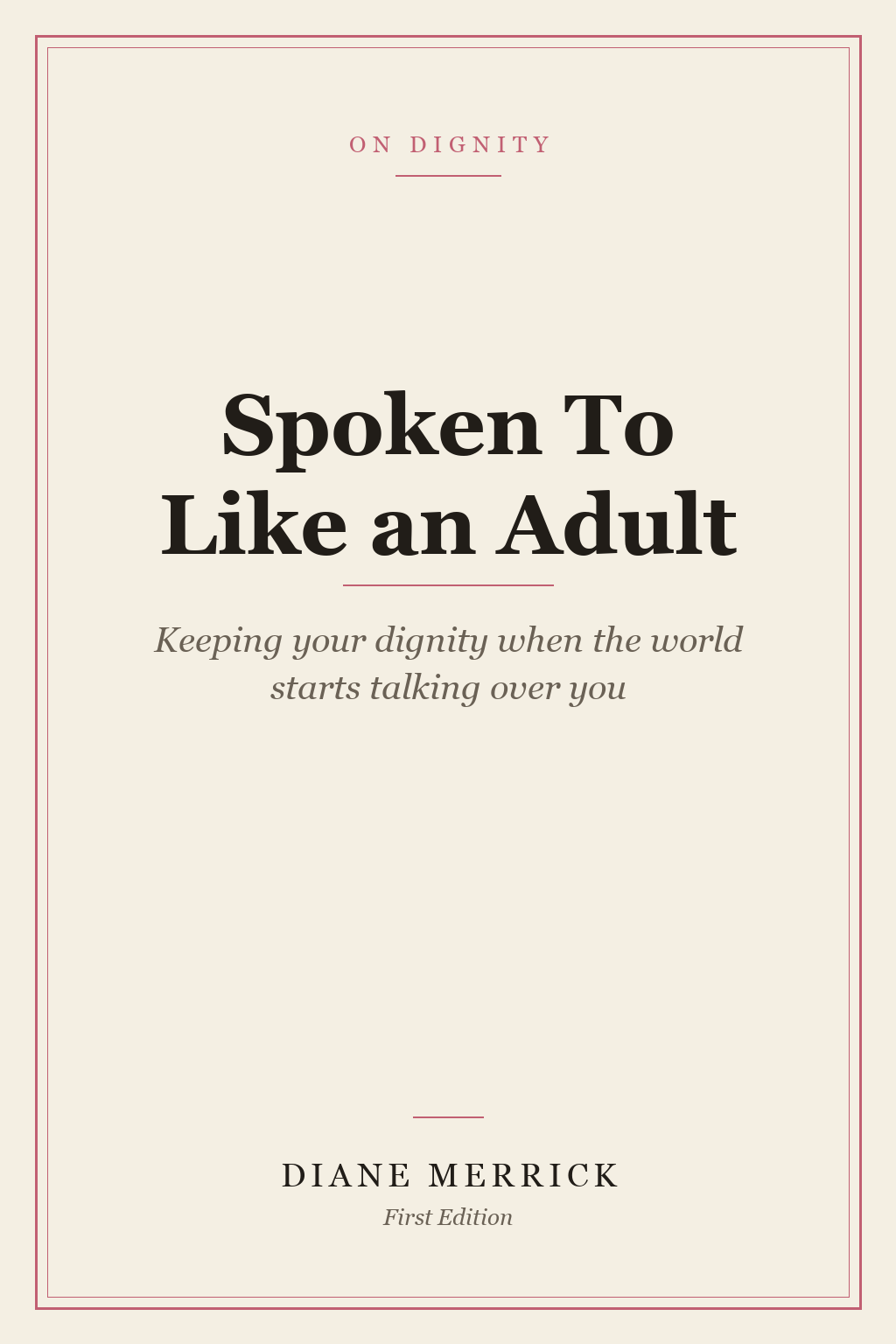
Thirty-three short chapters. Every one hands the power back to you.
Not "advocate for yourself." The actual sentence to say, the way to hold your face, the line that ends it — so the decision about your life stays yours.
- Spoken To Like an Adult — the complete book$49185 pages. Thirty-three short chapters on keeping your dignity when the world starts talking over you — and staying the author of your own life.
- Part I · Being Handled$19The counter, the "sweetheart," the slow loud voice, and the conversation held over your head while you sit right there — and exactly what to say.
- Part III · The Big Conversations$15The house that's "too big," the car, and keeping your own counsel when everyone has an opinion about your life "for your own good."
- Part V · On Your Own Terms$14Making your wishes known so it isn't a fight later — and making sure the person who decides is you.
- Lifetime updates$14Every future edition, free, forever.
- Total value $111 — you pay once$111$47
One of these happened to you this month. You said nothing.
Every chapter opens on a moment you'll recognise — and ends with you more in charge, not less.
Nothing here is medical advice. This is a book about dignity and who decides — never about the body. Every question about your body belongs to your doctor.
Exactly what is in the book.
Five parts. Read them in any order you like.
- Talked over to whoever brought you
- The word "sweetheart," and your face
- When it's your own children doing it
- Asking for help without surrendering
- Accepting help without resenting it
- Letting them do the thing, not decide the thing
- The house that is now "too big"
- Driving: the one nobody says out loud
- Keeping your own counsel
- Doing things slowly and badly is still doing them
- Refusing the diminished script
- Changing your mind is a right, not a symptom
- Making your wishes known so it isn't a fight
- Who decides, and how to make sure it's you
- Not being managed by the people who love you
- Why I never got used to it
- How to use this book
- A necessary word
About Diane.
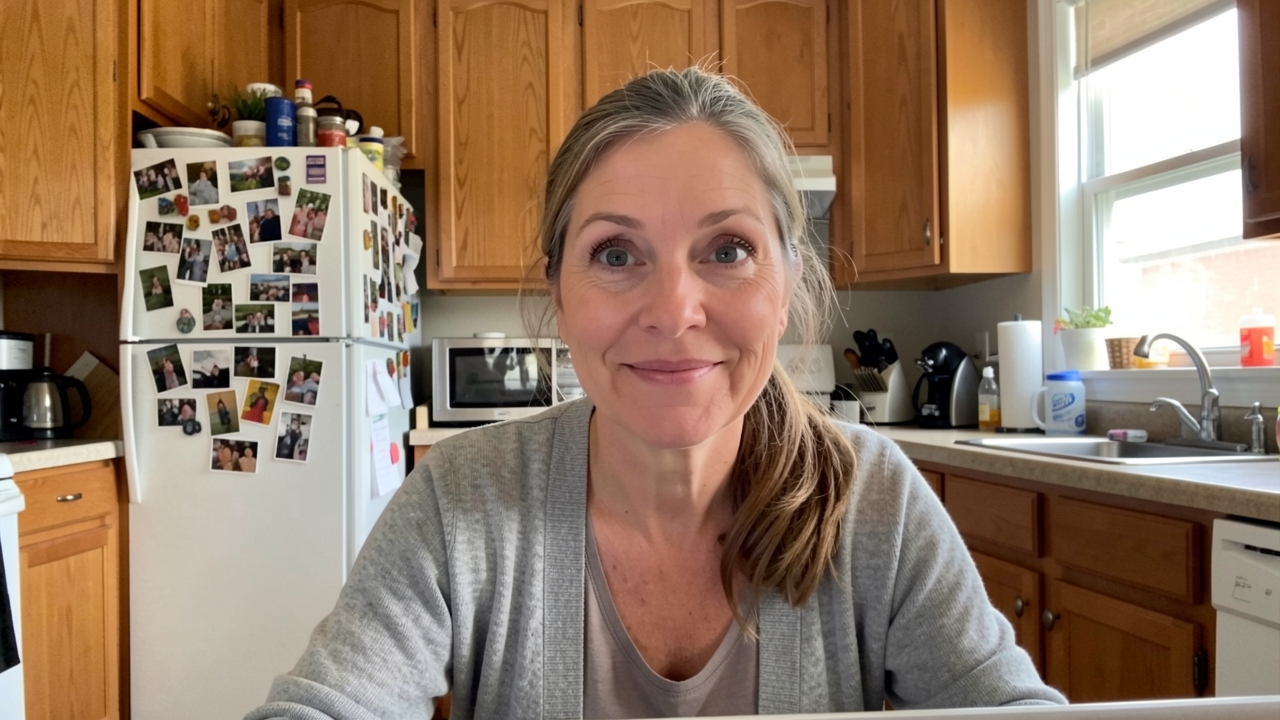
Diane Merrick has spent her life around old people — first her own mother, then years of working with them in their own homes. She is not a nurse, a therapist, or an adviser, and has no letters after her name. What she has is a temper she never lost about one particular thing: how the world speaks to old people.
She was the one standing next to them at the counter, in the waiting room, at the family meeting — watching the words go over their heads and watching what it did to their faces. This book is that anger turned into something you can use: the exact sentence, the look, the line that ends it, so you stay a competent adult in everyone's eyes, including your own.
Diane is not a doctor, a nurse, or a financial adviser, and there is no medical or financial advice in this book. It is about dignity and who decides — never about the body. Your body belongs to your doctor.
$47 once. Yours to keep, and to stay yourself with.
No subscription. One payment, lifetime access, free updates.
- Spoken To Like an Adult — the complete book$49185 pages. Thirty-three short chapters on keeping your dignity when the world starts talking over you — and staying the author of your own life.
- Part I · Being Handled$19The counter, the "sweetheart," the slow loud voice, and the conversation held over your head while you sit right there — and exactly what to say.
- Part III · The Big Conversations$15The house that's "too big," the car, and keeping your own counsel when everyone has an opinion about your life "for your own good."
- Part V · On Your Own Terms$14Making your wishes known so it isn't a fight later — and making sure the person who decides is you.
- Lifetime updates$14Every future edition, free, forever.
- Total value $111 — you pay once$111$47
Fair questions before you spend $47.
Is this about giving up driving, moving house, that sort of thing?
It's about keeping those decisions yours. Diane never tells you when to stop anything — that's your call and, where the body's involved, your doctor's. The book is about not having the decision quietly taken away from you and announced to you afterwards.
Won't this just make me difficult?
No. It'll make you clear. There's a difference between being awkward and being an adult who expects to be addressed directly, and Diane gives you words that are firm without being a scene.
My family means well. Is this going to cause fights?
Most of them do mean well — that's exactly why it's so hard to push back. There's a whole part on taking help and staying in charge, and on making your wishes known now so it isn't a fight later.
Is it a health or care book?
No, pointedly. There's not a word in it about conditions, symptoms or the body — that's your doctor's business. This is about dignity and autonomy: being treated as the competent adult you still are.
What format is it, and how do I get it?
A PDF you can read on any phone, tablet or computer, and print if you like. The type is set large on purpose. You download it the moment you've paid, and it's emailed to you as well.
What's the refund policy?
7 days, no questions asked. If it doesn't help you, write to us and we'll refund every cent.